

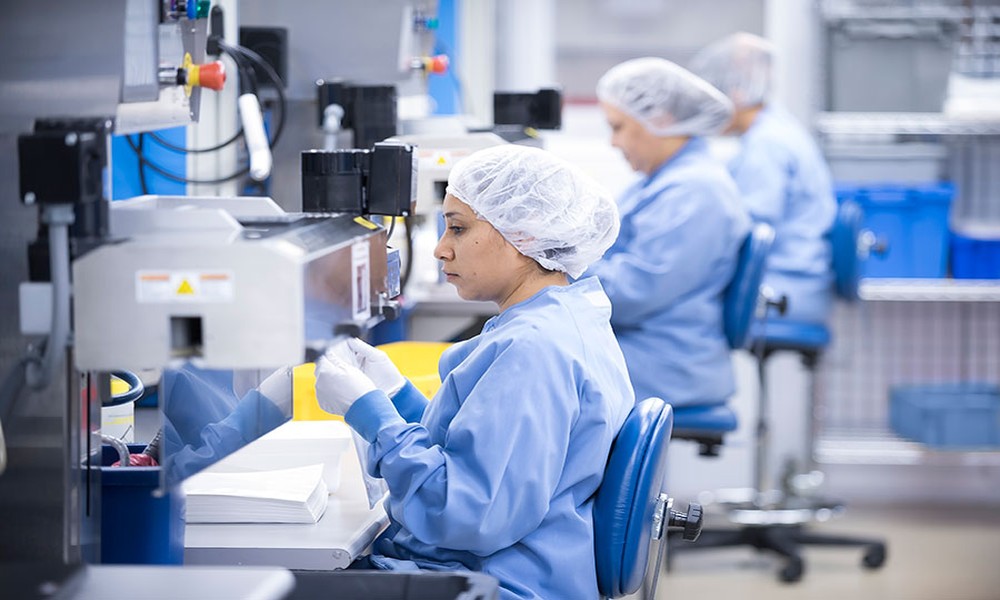
A medical contract manufacturer provides device companies with production capacity, regulatory knowledge, and supply chain infrastructure that would take years to build independently. Original equipment manufacturers in the healthcare sector face growing pressure to deliver certified products faster, at lower cost, and across multiple regulatory jurisdictions. Outsourcing production to a qualified partner addresses these constraints without compromising patient safety or product integrity.
The Role of Contract Manufacturing in Healthcare
From Concept to Certified Product
Medical device development follows a structured path. Design validation, biocompatibility testing, process qualification, and regulatory submission all precede commercial production. A contract manufacturer with deep experience in this sequence accelerates timelines by applying lessons from previous programmes. Engineers familiar with FDA 510(k) pathways, CE marking under the EU MDR, and Health Sciences Authority requirements in Singapore reduce the risk of costly submission delays or rejection.
The manufacturer maintains validated processes and documented procedures that satisfy audit requirements from multiple regulatory bodies simultaneously. This preparation means that when a client transfers a new product, the facility is ready to begin production qualification within weeks rather than months.
Clean Room and Controlled Environments
Medical components often require assembly in ISO Class 7 or Class 8 clean rooms. These controlled environments limit airborne particulate contamination to levels specified by ISO 14644. Temperature, humidity, and differential air pressure are monitored continuously through automated building management systems. A dedicated contract production partner invests in these facilities and maintains them to audit-ready standards year-round, absorbing the capital expenditure that device companies would otherwise bear.
Scalability Without Compromised Quality
Demand for medical devices fluctuates with hospital procurement cycles, regulatory approvals in new markets, and seasonal patterns in elective procedures. A contract manufacturer absorbs these fluctuations by maintaining flexible production capacity and cross-trained workforce teams.
Scaling from 5,000 to 50,000 units per month requires more than additional machine hours. It demands validated processes that perform identically at higher throughput. Statistical process control charts, automated inspection systems, and lot-level traceability ensure that every unit meets specification regardless of batch size.
Professor Tan Sze Wee, Assistant Chief Executive of the Biomedical Research Council at A*STAR, observed in a 2023 panel discussion: “Singapore’s contract manufacturers have invested in automation and digital quality systems that allow them to scale medical device production while maintaining the traceability and consistency that global regulators expect.”
Regulatory Compliance Across Borders
ISO 13485 and Quality Management
ISO 13485 certification forms the foundation of quality management in medical device manufacturing. The standard requires documented procedures for design control, risk management, supplier qualification, corrective actions, and management review. A medical contract manufacturer holding this certification demonstrates systematic compliance that device companies can reference in their own regulatory filings.
Beyond ISO 13485, facilities serving the US market maintain FDA registration and comply with 21 CFR Part 820 quality system regulations. European market access requires conformity assessment under the Medical Device Regulation (EU) 2017/745. Each regulatory framework imposes specific documentation, labelling, and post-market surveillance obligations.
Traceability and Record Keeping
Every raw material lot, process parameter, inspection result, and shipping record must be retrievable for the lifetime of the device. Electronic batch records and enterprise resource planning systems capture this data in real time, linking each finished unit to its complete manufacturing history. This digital infrastructure supports recall investigations and post-market surveillance reporting.
Capabilities That Define a Strong Partner
Device companies evaluating contract manufacturers should assess the following capabilities:
- Process validation for injection moulding, metal injection moulding, CNC machining, and manual assembly operations
- Clean room facilities with appropriate ISO classifications for the device risk category
- In-house metrology laboratories equipped with coordinate measuring machines, optical comparators, and surface profilometers
- Experience with biocompatible materials including medical-grade stainless steels, titanium, PEEK, and silicone
- Established relationships with sterilisation service providers for gamma, EtO, or electron beam methods
These capabilities reduce the number of suppliers in the production chain and simplify quality oversight for the device company.
Supply Chain Resilience and Risk Mitigation
Dual Sourcing and Inventory Strategy
Reliance on a single raw material supplier creates vulnerability. Established contract manufacturers qualify secondary suppliers for critical materials and maintain safety stock levels calibrated to historical demand variability. Buffer inventory of long-lead-time components protects against shipping disruptions and unexpected demand spikes.
Geographic positioning also matters. Singapore’s location provides access to major shipping routes connecting Asia, Europe, and North America. Proximity to raw material suppliers in the region shortens lead times and reduces freight costs for components sourced within the Asia-Pacific corridor.
Choosing the Right Production Partner
The selection process extends beyond price comparison. Site audits, reference checks with existing clients, and review of corrective action histories reveal a manufacturer’s operational maturity. Response time during the quotation phase often indicates how the organisation will perform during production. A partner that provides transparent communication, realistic lead time estimates, and proactive risk identification earns trust over multiple product generations.
Securing Scalable and Compliant Output
Device companies that partner with a proven medical contract manufacturing gain access to validated processes, regulatory expertise, and flexible capacity. This collaboration allows them to bring safe, certified products to patients worldwide while a medical contract manufacturer manages the complexities of production, compliance, and supply chain coordination on their behalf.